

Audit Standards & Process
The Office of Audit Services evaluates and contributes to the improvement of governance, risk management, and control processes. The nature of the activities is determined by a risk assessment process undertaken annually with the input of senior management and the Board of Regents. In addition to audits and other assurance engagements, other value-added work may be performed to assist in the management of risks, add value, and improve the Texas Tech University System’s operations.
Audit Standards
The Texas Internal Auditing Act requires our office to conform with generally accepted government auditing standards and the Institute of Internal Auditors’ (IIA) Global Internal Audit Standards and Topical Requirements.
Audit Process
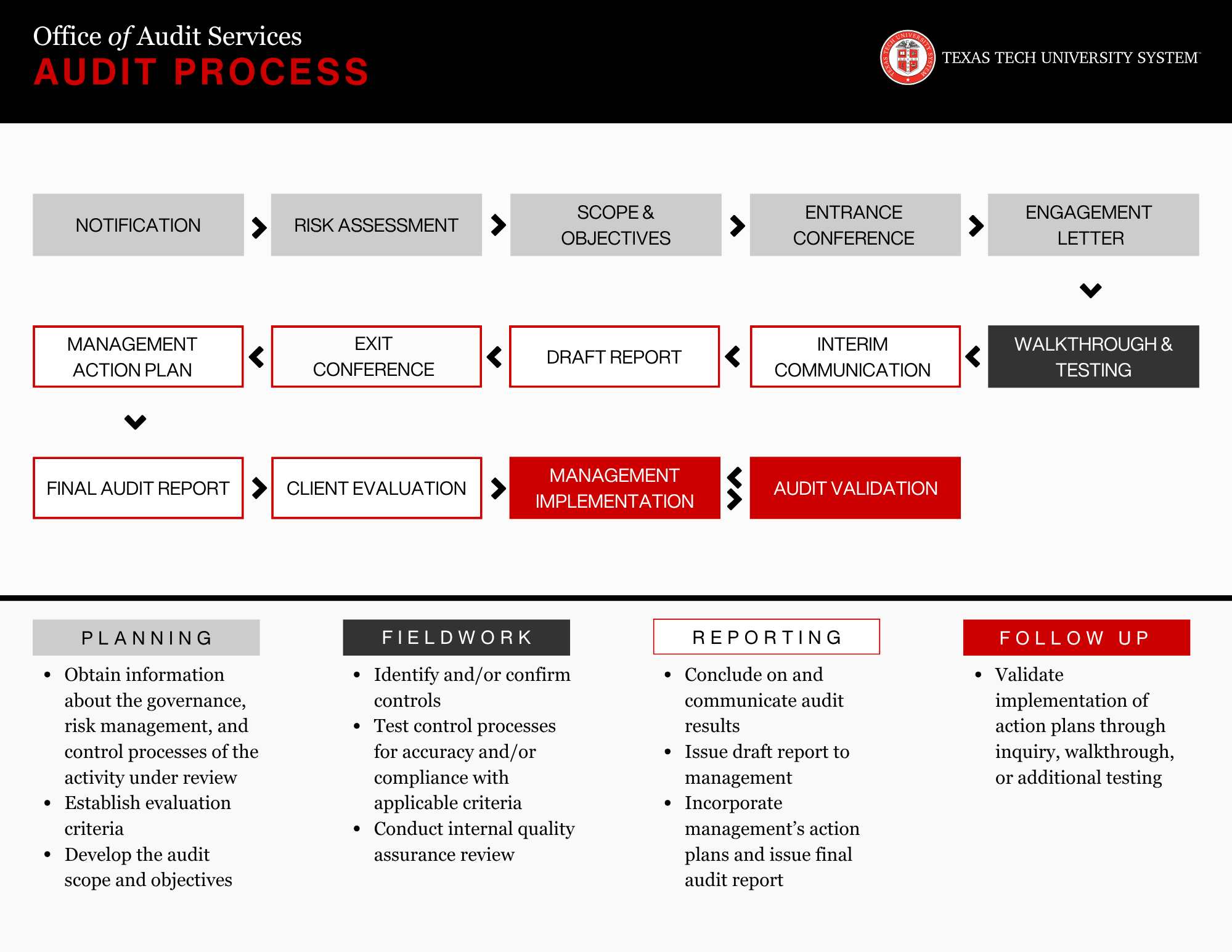
Audits are performed in four general phases: planning, fieldwork, reporting, and follow-up. While auditors usually notify the appropriate level of university management as to the timing, staffing, and scope of engagements included in the annual audit plan, the performance of certain procedures (e.g., cash or inventory counts) or certain engagements (e.g., fraud investigations) may be unannounced. During the planning phase, auditors gather relevant background information to gain an understanding of the audited area’s strategic objectives, responsibilities, and general processes and procedures in place. The audit scope and objectives are determined based on an assessment of identified risks. The evaluation phase of the audit is referred to as fieldwork. This phase includes assessing the effectiveness of internal controls and compliance with applicable laws and regulations; testing of transactions, records, and resources; and performing other procedures necessary to accomplish the objectives of the audit.
Auditors will ordinarily communicate the progress and results of engagements with client management periodically during the engagement. Audit reports are generally addressed to the client management personnel with direct responsibility for the area, function, or department audited. When there are audit findings, management will be asked to provide an action plan to address the identified risks. Management’s action plan will be incorporated into the final engagement report. Copies of final reports are normally sent to the executive to whom the individual responsible for the audited area reports, the President, the Chancellor, and the Audit Committee of the Board of Regents. Depending on the subject matter of the report, other individuals may also receive the report. Engagements are not considered complete until the final report has been issued.
Audit standards require auditors to establish a follow-up process to monitor and ensure that management actions have been effectively implemented or that the noted issue/risk has been otherwise mitigated.
For additional information on Audit Services’ communications and operations, see Texas Tech University System Regulation 08.01.
Audit Quality
Our office has instituted a quality assurance and improvement program to ensure compliance with professional standards, consistency, and quality in Audit Services’ operations. The program includes self-assessments, performance measures, client evaluations, staff evaluations, and external quality assessments conducted by experienced higher education audit professionals.
